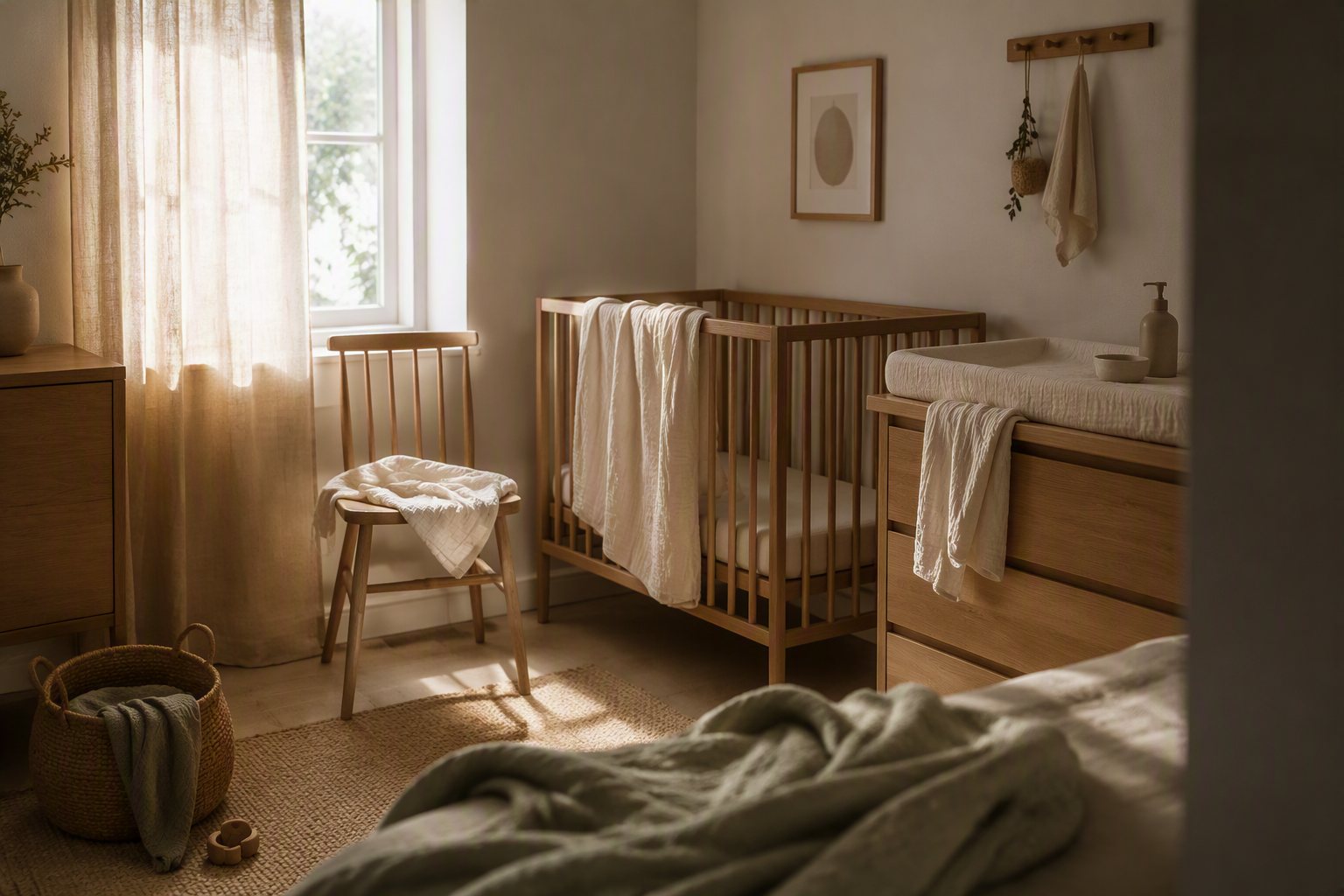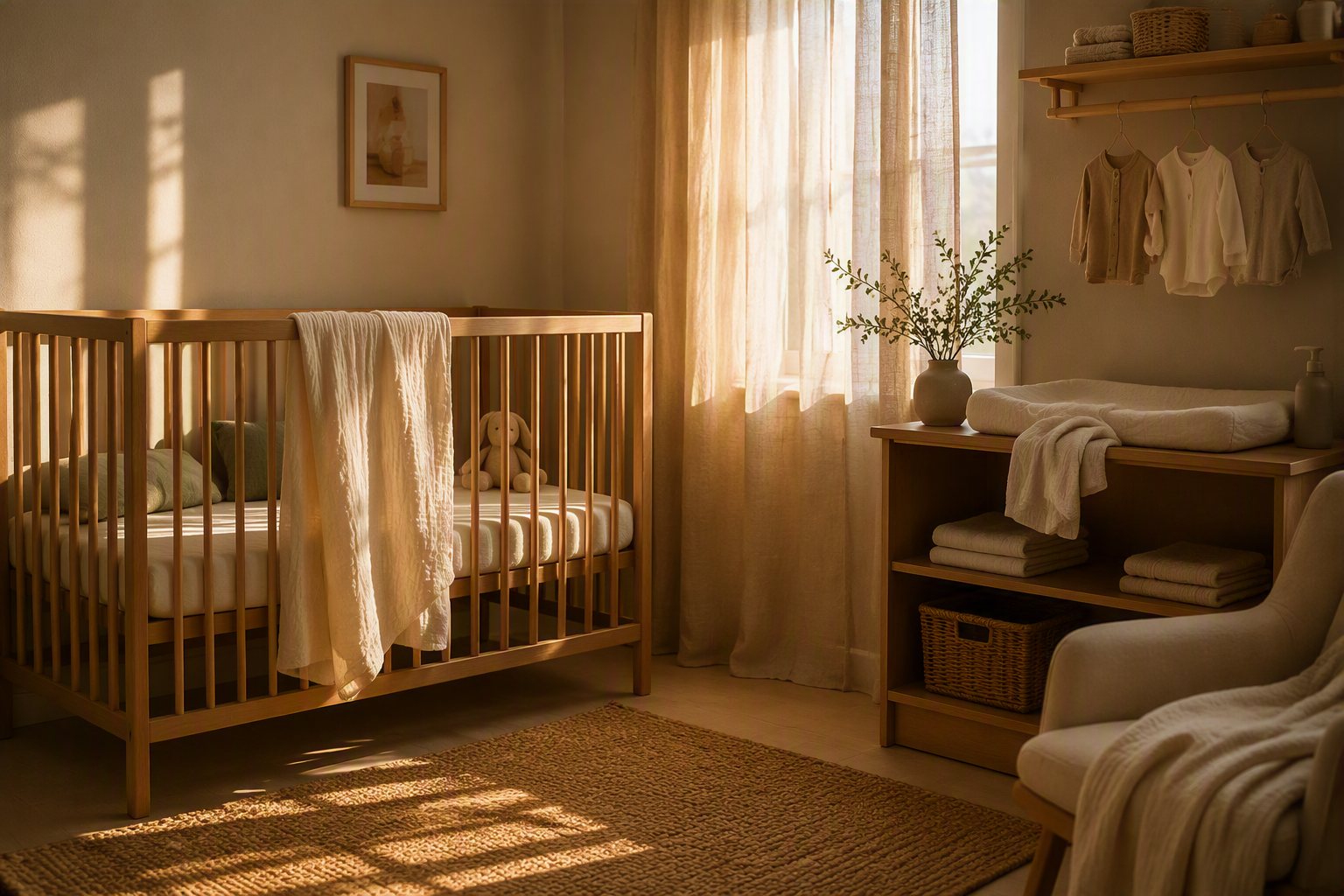
A nursery doesn’t need to say much to work. The calmest rooms we’ve seen had little on the walls and a lot of attention in the details you actually touch: bedding, a throw, the light in the afternoon.
Why calm matters
A low-stimulus room is easier to take in, for adults as much as for children. That’s not a medical claim, just a practical one: less visual noise in a room means less to tidy and fewer decisions before it feels settled.
Colour & texture
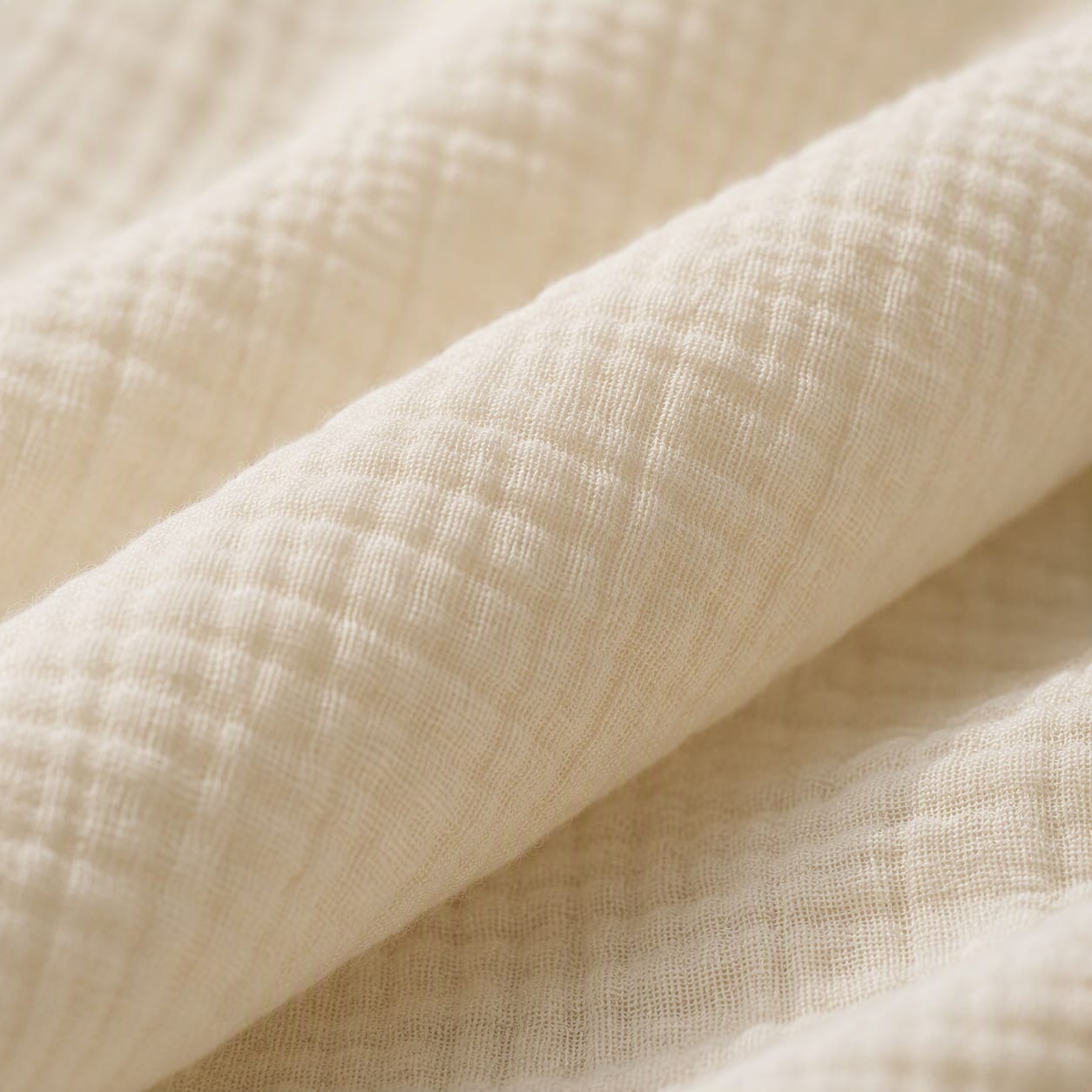
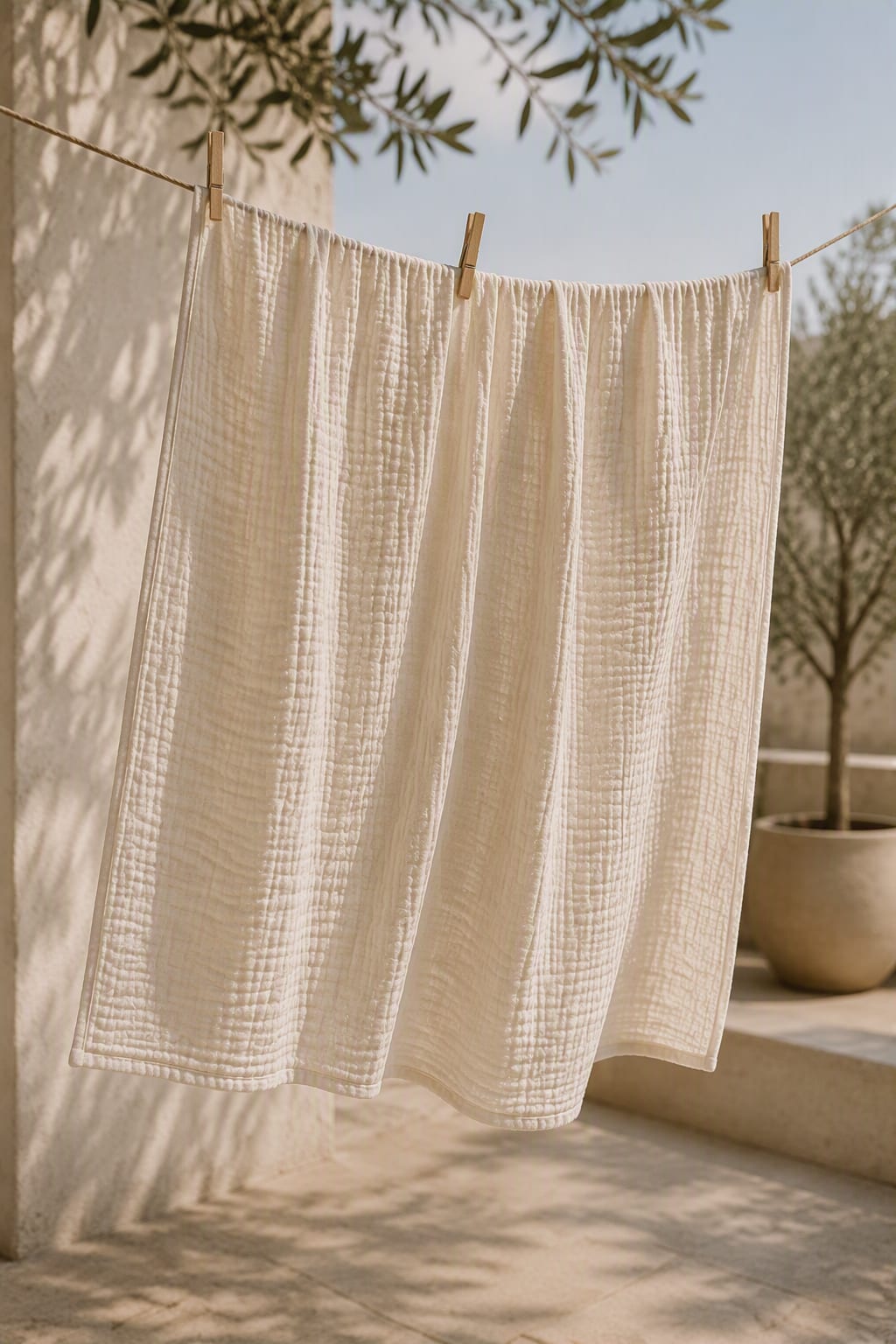
Broken natural tones such as linen, sand and a muted sage shift gently with daylight instead of fighting it. Texture then does the work that pattern or colour would otherwise do: the difference between smooth wood, coarsely woven fabric and soft muslin is enough to make a room interesting without making it busy.
Less, but deliberate
A bed, a surface for changing or storage, somewhere for clothes: that’s what a nursery needs to start. Every piece beyond that earns its place once a real need shows up, not because a checklist demanded it. That leaves room for good light too: a simple curtain that filters daylight rather than blocking it often changes a room more than any piece of furniture.
More on the colour palette: read “Combining natural tones”
FAQ
Which colours feel calmest in a nursery?
Broken natural tones such as linen, sand and sage, rather than pure white or saturated colour. They shift less dramatically with the light through the day.
How much furniture does a nursery actually need?
A bed, a changing or storage surface, somewhere for clothes. Anything beyond that can be added later, once a real need appears.
Is a mobile or wall art necessary?
No. An empty stretch of wall isn't an unfinished room, because it lets light and texture do the work.
We write about materials, care and calm living.